
QR Code vs Barcode: What’s the Difference and Which One Should You Use?
Follow Us
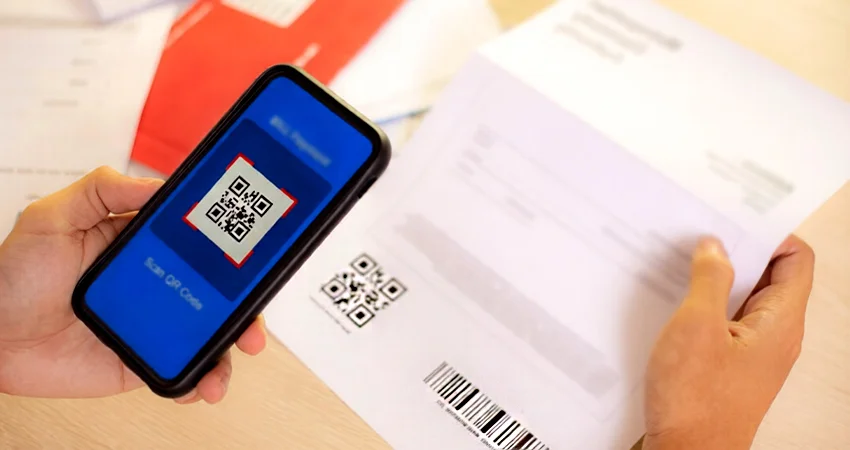
Retail stores, warehouses, restaurants, and businesses are using QR codes and barcodes more frequently than ever. They might look similar at first glance, but they are for different purposes and work differently.
In this guide, you will learn about the complete QR code vs barcode comparison, their structure, uses, advantages and disadvantages, and when to use one over the other for business.
What Is A Barcode?
A barcode is a machine-readable system of parallel lines and numbers. It stores data in a one-dimensional (1D) format and is widely used for inventory management, product tracking, and retail checkout systems.
Traditional barcodes normally contain a small amount of information, usually just a product ID or serial number. Scanners read them horizontally.
Common Uses:
Barcodes have many uses:
- Retail Product Label
- Inventory Management
- Shipping & Logistics
- Library Systems
- Production Activities
What Is A QR Code?
A QR code (quick response code) is a two-dimensional (2D) code that can hold much more information than a barcode. It can store URLs, texts, contact information, payment information, Wi-Fi information, and a lot more. QR codes are unlike barcodes, as smartphones and QR readers can read them from any angle.
If you’re new to QR technology, check out our thorough guide “What is a QR code?” to find out how it works.
QR Code vs. Barcode: Major Differences
Understanding the difference between a barcode and a QR code helps businesses choose the right solution for their needs.
Features | Barcode | QR Code |
Data Type | 1D (Linear) | 2D (Matrix) |
Storage Capacity | Limited | High |
Scanning Direction | Horizontal only | Any angle |
Error Correction | Minimal | Advanced Error Correction |
Scanning Device | Dedicated Scanner | Smartphone/Scanner |
Speed | Moderate | Fast |
Use Cases | Retail & inventory | Marketing, payments, tracking, sharing |
Information Supported | Numeric/alphanumeric | URLs, text, multimedia, payments |
This comparison clearly shows why the barcode and QR code differences matter in modern digital workflows.
Barcode vs. QR Code: Which Stores More Data?
One of the significant differences in the barcodes vs. QR codes debate is data storage. Usually, traditional barcodes contain:
- Product code
- SKU IDs
- Primary inventory details
On the other side, QR codes can contain the following:
- Website links
- PDFs
- Images
- Contact information
- Download links for the app
- Billing information
- Social media links
This flexibility has made the QR code a popular choice for businesses looking to create engaging customer experiences and digital touchpoints.
What Are The Advantages Of Barcodes?
QR codes may be more sophisticated, but barcodes do have some advantages.
1. Low-Cost
Barcodes are cheap to print and implement, and thus, they are ideal for retail businesses.
2. Basic Inventory Control
They help track, stock and help identify products.
3. Widely Supported
Barcodes are mostly supported by retail systems and scanners.
4. Quick Checkout
Billing and inventory operations get faster with barcode scanning.
What Are The Disadvantages Of Barcodes?
They are useful, but they have some limitations.
1. Data Storage Is Limited
A barcode doesn’t hold much information.
2. Specialised Scanners Required
Most of the traditional barcodes require laser scanners to be read properly.
3. Fragile
If the printed lines are scratched or blurred, scanning can fail.
4. One-Directional Scanning
For successful scanning, barcodes must be properly aligned.
What Are The Advantages Of QR Codes?
QR codes provide more flexibility and functionality for both the business and users.
1. More Storage Capacity
QR codes can store a lot more information than barcodes.
2. Works with Smartphones
Users can scan them directly with mobile phones, without any additional hardware.
3. Scan More Quickly
QR codes are quick to scan at a variety of angles.
4. Other Marketing Opportunities
Businesses can link QR codes to websites, menus, promotions, landing pages, and payments.
5. Error Correction Technology.
QR codes that are partially damaged can often still be scanned.
What Are The Disadvantages Of QR Codes?
QR codes are useful, but they also have some downsides.
1. Security Issues
Bad QR codes can send people to dangerous sites if you don’t check.
2. Requires Internet
Many QR codes require an internet connection to work.
3. Overuse Can Lead To Less Engagement
Too many QR codes in one campaign may confuse the user.
Barcodes vs QR codes: Use Cases
Which one to use and when to use, it all depends on your business goals.
When To Use Barcodes?
- Inventory management
- Follow your products
- Retail checkout systems in use
- Warehouse item labeling
When To Use QR Codes?
- Website sharing links
- Running digital marketing campaigns
- Payment
- Provisioning
- Restaurant menus
- Exchanging contact details
- Analytics and tracking scans
Static and Dynamic QR Codes
Businesses using advanced campaigns typically prefer dynamic QR codes over static QR codes for editable links and scan tracking. For permanent, non-editable applications, static QR codes may be used.
If you choose to use QR codes, it’s important to know the difference between static and dynamic codes.
Static QR codes have immutable information and cannot be altered once generated. With dynamic QR codes, you can change the destination without changing the QR code.
Read more in our complete guide to static vs. dynamic QR codes.
How To Create A QR Code?
Designing a QR code is simple and takes just a few steps:
- Select a QR code generator
- Type in your URL or data
- Customize according to your brand
- Download QR code
- Print or share digitally
If you want to create a perfect QR code that offers smooth scanning, then see our detailed guide on how to create a QR code with step-by-step instructions.
Final Words
The question of barcode vs. QR code is really about functionality and what your business needs.
Barcodes are still a fantastic way to handle inventory and retail. QR codes are more versatile and interactive, and have more potential for digital engagement.
If all you need is basic product tracking, barcodes might be sufficient. But if you want customer interaction, mobile access, analytics, or editable content, the QR code is the better option.
As digital experiences grow, QR codes are becoming a vital tool for businesses across industries.
Want to generate your own QR code?
Try QR Inventor’s free QR code generator to build dynamic, trackable, and modern QR experiences for your business or personal use today.
Frequently Asked Questions (FAQs)
The only difference between a barcode and a QR code is the way they store data. Barcodes are 1D and can store only a limited amount of numeric or alphanumeric data, but QR codes are 2D and can encode much larger amounts of data, such as URLs, text, payment information, and contact information.
It depends on what you want to do. Barcodes are more useful for inventory management and retail checkout systems, while QR codes are better suited for marketing, digital payments, customer engagement, and mobile-friendly experiences.
The majority of today’s smartphones are capable of scanning QR codes with the built-in camera. Some phones can scan barcodes too, but traditional retail barcodes usually require dedicated barcode scanners to read them faster and more accurately.
In general, static QR codes don’t really expire. They are stored in the code forever. However, dynamic QR codes can die if the subscription or the QR code service is discontinued.
QR codes are more advanced but can sometimes be a security risk if they lead users to malicious websites. Always use reliable QR code generators and check links before sharing them publicly.
Yes, in some industries. QR codes can replace bar codes as they contain more information and are scannable via mobile. But conventional barcodes still have a crucial role in many retail and logistics systems for inventory and product tracking.
Categories


Table of Contents
- What Is A Barcode?
- What Is A QR Code?
- QR Code vs. Barcode: Major Differences
- Barcode vs. QR Code: Which Stores More Data?
- What Are The Advantages Of Barcodes?
- What Are The Disadvantages Of Barcodes?
- What Are The Advantages Of QR Codes?
- What Are The Disadvantages Of QR Codes?
- Barcodes vs QR codes: Use Cases
- Static and Dynamic QR Codes
- How To Create A QR Code?
- Final Words
- FAQs