
What Is A QR Code? The Ultimate Guide to Understanding Scanning Technology
Follow Us
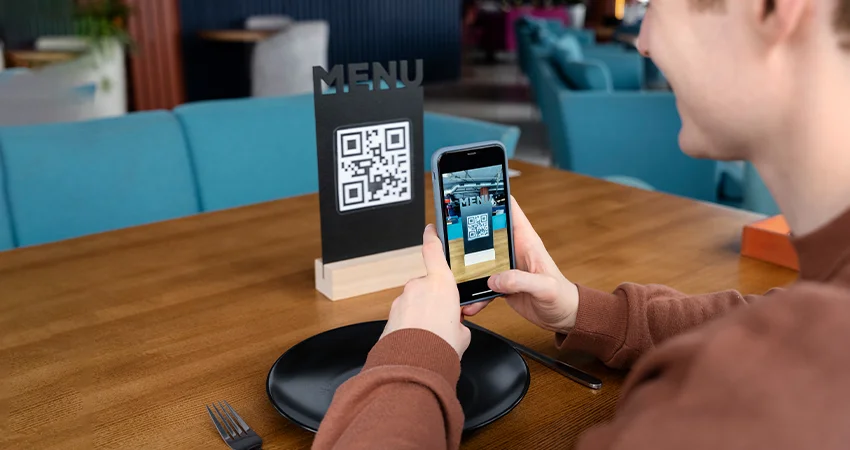
Today, we see those little, pixelated black-and-white squares all over the digital world. But what are they? It too got you thinking, right? Don’t worry, in this blog, we will answer all the questions you have in mind.
We see QR codes everywhere: on restaurant menus, product packaging, TV commercials, and digital boarding passes. It’s the bridge between the physical and digital worlds.
But what is a QR code? This question goes beyond the appearance. It’s a highly sophisticated way of encoding data, and it has changed how we instantly share information.
What Is A QR Code?
The meaning of a QR code is not something you can just look up in a dictionary. A QR code (Quick Response code) is a type of matrix barcode that contains information in both the horizontal and vertical directions, whereas a traditional barcode stores data in a linear fashion.
The full form of the “QR” code is “Quick Response” code. The name was chosen in 1994 by the inventors at Denso Wave, a subsidiary of Toyota. The main purpose was to develop a code that could be read at high speed, especially when tracking vehicles and parts in the manufacturing process.
How Does A QR Code Work?
To understand what a QR code is and how it works, it’s helpful to think of it as a more complex version of the usual UPC barcode you see on grocery items.
How QR Code Works: Anatomy of a Square
There are a few important elements of a QR code that allow a scanner (such as your mobile phone camera) to read the information:
- Finder Patterns:
Those are the three big squares in the corners. They assist the scanner in determining the code’s orientation and position. - Alignment Patterns:
Small squares that ensure the code can be read even if it is distorted or printed on a curved surface. - Timing Patterns:
Lines used by the scanner to determine the size of the data matrix. - Quiet Zone:
The white border around the code helps the scanner distinguish it from its surroundings. - Data Modules:
The actual binary data is encoded in tiny black-and-white dots.
The data encoding in QR codes involves the Reed-Solomon error correction. This means that a code can still work even if it is partially damaged or dirty. This is one of the remarkable benefits of QR codes over traditional linear barcodes.
Barcode vs. QR Code Difference
While both barcodes and QR codes are used for data storage, there is a substantial difference between them:
Feature | Traditional Barcode (1D) | QR Code (2D) |
Data Capacity | Low (approx. 20-25 characters) | High (up to 7,089 characters) |
Data Types | Alphanumeric only | Text, URLs, binary, and Kanji |
Size | Requires more horizontal space | Compact and scalable |
Error Correction | None (damage makes it unreadable) | High (remains readable if damaged) |
Types of QR Codes: Static vs Dynamic
Not all QR codes are the same. When you opt for a free QR code generator service, you will most likely find two main types:
1. Static QR Codes
A static QR code contains “hard-coded” information. The destination cannot be changed after code generation. These are particularly useful for things that don’t get old, like a Wi-Fi password or a plain text message. The more information you add, the more complex and dense the code, as the data is embedded directly into the pattern.
2. Dynamic QR Codes
Dynamic codes offer much more flexibility in business use. They don’t actually save the result data; they save a “short URL” that redirects the user. This means you can change the destination URL whenever you want without altering the printed code.
Also, a dynamic QR code allows you to monitor the number of scans, location, and device type, which is a key feature of modern QR code applications.
Applications and Uses of QR Codes
Only imagination limits the uses of QR code technology. Due to their cost-effectiveness and ease of deployment, they have been widely adopted in many sectors.
Examples of QR Codes in Real Life:
- Contactless Menus: Restaurants are now adopting them for digital menus, saving on print costs and improving hygiene.
- Mobile Payments: Applications like PayPal, Venmo & some banking apps use QR codes to make P2P transfers.
- Authentication: Two-factor authentication (2FA) apps typically use a QR code to synchronize a mobile device with a secure account.
- Marketing and Advertising: Scanning a code on a billboard or flyer takes customers to a landing page or to a newsletter sign-up.
Professional QR Code Applications:
- Inventory Management: Keeping track of assets in large warehouses.
- Event Ticketing: Scan digital tickets at concerts or sports venues.
- Healthcare: Connecting patient identification to digital medical records.
Advantages of QR Codes: Why Are QR Codes Important?
- Universal Accessibility: QR code scanning capability is built into the native camera app on almost all modern smartphones. No special hardware needed.
- Cost-Effectiveness: It is almost free to produce a code, and printing a code costs no more than printing a standard logo.
- Speed and Efficiency: It saves users time typing long and complex URLs, removing the “friction” in the user experience.
- High Information Density: Stores much more information than a traditional barcode in a much smaller area.
QR Code Security & Safety
As with any other digital gateway, the safety and security of QR codes are valid concerns. Because humans cannot “read” a QR code by looking at it, sometimes attackers will use “quishing” (QR phishing). That means overlaying a fake QR code on a legitimate one to redirect people to malicious sites.
Just to be safe:
- Verify the code: Ensure that it is not a sticker placed over the original code.
- Preview URL: Many scanners provide a URL preview before clicking on the link. Verify suspicious domains.
- Avoid risky transactions: Be cautious when scanning codes in public places that request financial or personal data.
Want to generate your own QR code?
Try QR Inventor’s free QR code generator to build dynamic, trackable, and modern QR experiences for your business or personal use today.
The Future of Scanning Technology
The evolution of QR code data encoding continues to advance. We are seeing the rise of branded QR codes with logos and colors, as well as encrypted QR codes for high-security applications in government and corporate environments.
Their importance will only increase as we move towards a more paperless, “touch-free” society. If you are a business owner and are looking for a free QR code generator, then QR Inventor is here to serve your needs.
In short, a QR code links physical objects to digital information. Individuals and businesses can use QR codes to communicate faster and more effectively in our increasingly digital world. By understanding the different types of QR codes, whether static or dynamic, businesses can boost visibility and earn revenue through them.
Categories


Table of Contents
- What Is A QR Code?
- How Does A QR Code Work?
- Barcode vs. QR Code Difference
- Types of QR Codes: Static vs Dynamic
- Applications and Uses of QR Codes
- Advantages of QR Codes: Why Are QR Codes Important?
- QR Code Security & Safety
- The Future of Scanning Technology