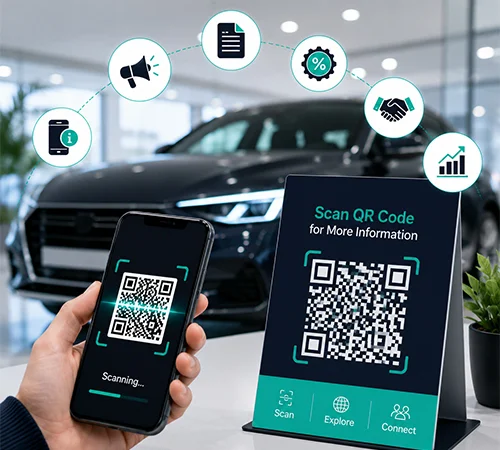
From service facilities to showrooms, automotive QR codes generate quicker, more efficient, and more interesting customer experiences. With a smartphone, consumers may directly obtain vehicle specs, pricing, finance choices, virtual tours, service information, and dealer contact data.
Companies throughout the automotive sector are using QR codes as they enhance both internal processes and customer experiences.
Customers can directly obtain vehicle data, digital brochures, service records, financing alternatives, and interactive experiences from their cell phone without waiting for staff support. Automotive QR codes enable dealers and car firms to simplify customer contacts, reduce printed documents, monitor engagement, and provide quicker, more linked buying and service experiences. QR codes generate quantifiable digital touchpoints from showroom floors to after-sales support that enhance efficiency and update the whole client experience.
Here are some automotive industries where QR codes for vehicles are generally used.
01
Car dealers put QR codes on cars so that customers can immediately see the specs, prices, financing options, and virtual tours. This lets consumers browse vehicles on their own before they talk to a salesperson.
02
In vehicle displays, showrooms, and brochures, automobile companies use QR codes to provide comprehensive product information, feature breakdowns, and marketing materials. It facilitates the bridging of actual cars with lavish digital interactions.
03
Real-time tracking of vehicle data, maintenance history, and usage records is achieved by fleet operators using QR codes. This enhances efficiency and streamlines large-scale fleet management.
04
QR codes are used by logistics companies for route management, shipment tracking, and vehicle identification. It coordinates activities over supply chains and increases transparency.
05
Quick check-ins, booking information, damage reports, and digital contracts are all handled by car rental companies using QR codes. Customers can obtain all rental information immediately without filling out any paperwork.
06
For schedules, route information, ticketing, and real-time updates, transportation companies utilize QR codes. This raises passenger convenience and lowers reliance on human aid.
07
Entry, departure, and digital payments all employ QR codes in parking management systems. Drivers may quickly and effectively scan to pay or obtain parking information.
08
QR codes are used by repair shops to keep track of every car’s service history, diagnosis findings, and repair status. Customers can scan to monitor service development and access clear records.
09
Shared mobility systems use QR codes to unlock cars, confirm users, and keep an eye on excursions. This makes it possible to quickly and easily use shared mobility options.
10
Insurance companies utilize QR codes on policies and automobiles to provide claim submission, policy information, and accident reporting. It hastens customer support and streamlines processes.
Scanning QR codes for cars enables consumers to see upfront specifications, prices, financing possibilities, guarantee information, and maintenance records. This accelerates and enhances the interactive buying experience without involving team support.
From one centralized platform, a fleet QR management system assists companies in coordinating maintenance schedules, tracking fuel consumption, and managing inspection records. With just a scan, teams can swiftly retrieve vehicle data.
For rentals, shared mobility services, and parking systems, automotive QR codes enable contactless vehicle access. Users can scan a QR code to get directions.
Businesses can change information at any time with dynamic QR codes for cars without having to replace printed QR code vehicle stickers. This simplifies the administration of service information, pricing changes, and marketing initiatives.
QR codes on cars enable companies to link digital interactions with actual experiences. Customers can scan to see vehicle information, schedule test drives, investigate finance alternatives, or get quick access to customer support.
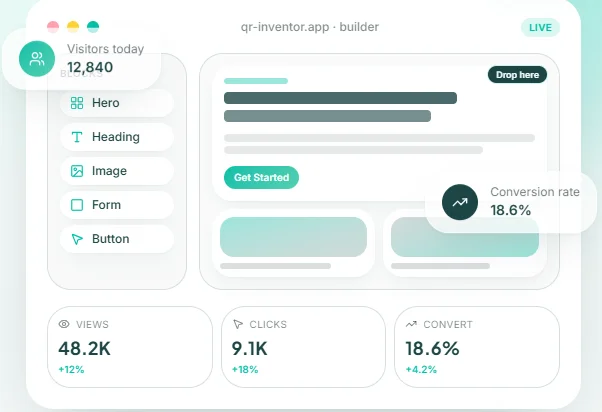
Use a robust automotive QR analytics dashboard to keep tabs on how much your consumers are engaging with your brand. Businesses can enhance their marketing and operational decisions by tracking scan activity, customer behavior, and QR code performance statistics.
QR technology for vehicle registration streamlines paperwork and verification procedures. A fast scan can give registration records, insurance information, inspection conditions, and ownership data.
Automotive QR code solutions enable companies to assess the conversion of physical car interactions into online interactions. This offline-to-online car tracking system gives useful customer insights and campaign statistics.
QR codes for automotive companies enable fast, digital-first experiences that modern consumers expect.
QR codes offer a flexible and scalable solution for streamlining fleet management, enhancing customer interaction, enabling scanning for vehicle information, and building a comprehensive automotive data tracking system.
For automobile firms, QR codes are scannable and are put on vehicles, showroom displays, papers, or service materials. They let consumers and employees immediately retrieve digital data, including vehicle specs, maintenance history, registration information, and booking forms.

Using their smartphone camera, customers just scan the QR code. The code sends them to a digital page where they may see vehicle specifications, financing data, maintenance records, or other related material.
Businesses may modify the linked information at any moment without changing the printed QR code by using dynamic QR codes.
Yes. By offering quick access to information, test drive forms, virtual tours, and support sites with a single scan, QR codes on cars provide quicker, more engaging customer experiences.
Car dealerships, fleet managers, logistics firms, rental companies, vehicle manufacturers, maintenance facilities, and shared mobility platforms all frequently utilize automotive QR code solutions.
With a centralized digital system, fleet QR management enables companies to more effectively monitor maintenance schedules, inspection reports, mileage logs, gasoline records, and driver tasks.
Automotive QR codes link digital engagement with actual car interactions. Companies can monitor how consumers interact with cars offline and assess activities like scans, reservations, or internet queries.