Improve Patient Experiences with QR Codes in Healthcare
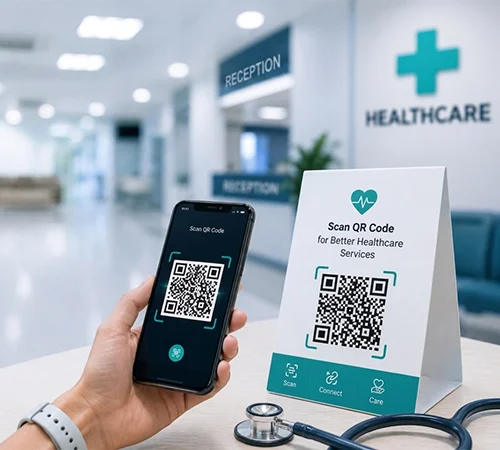
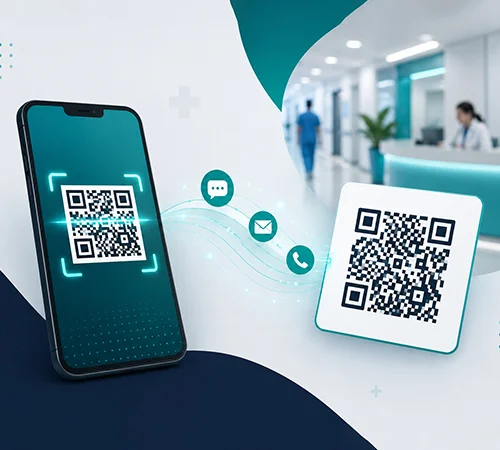
Healthcare providers are adopting digital solutions to ease patient communication and reduce administrative delays. With instant digital access, QR codes for healthcare serve as a simple yet effective way to connect patients, doctors, hospitals & medical systems.
The popularity of QR codes in healthcare stems from their fast, contactless access to vital medical data. Scanning a code lets patients and medical practitioners immediately view appointment information, prescriptions, lab results, and records, thereby reducing delays and improving efficiency in clinical operations.
By reducing manual errors in data processing, they also enhance patient safety and help minimize paperwork. QR codes simplify processes and enable quicker, more accurate healthcare delivery from hospital check-ins and medicine instructions to device tracking and emergency patient information.
Industries Using QR Codes in The Healthcare Sector
To enhance patient access, simplify processes, and facilitate quicker communication between medical services and patients, QR codes are being extensively used throughout healthcare.
01
Hospitals
For patient check-ins, medical record access, discharge summaries, and hospital navigation, hospitals utilize QR codes. They enhance general patient flow and reduce paperwork.
02
Clinics
QR codes are used by clinics for appointment booking, digital forms, and sharing prescriptions or treatment instructions. This increases waiting times and lowers efficiency.
03
Diagnostic Laboratories
QR codes are used by labs to connect patients with test results, sample tracking, and outcome history. This guarantees quicker, faultless retrieval of diagnostic data.
04
Drugstores
Pharmacies use QR codes on prescription and medication packaging to provide dosing and usage instructions, as well as refill information. It enhances adherence to drugs and raises medication safety.
05
Telehealth Care Professionals
QR codes are used by telehealth services to link patients straight to online health portals, doctor profiles, and virtual appointments. This streamlines and increases accessibility of remote care.
06
Dental Clinics
QR codes are used by dental offices for patient records, treatment regimens, and instructions for follow-up care. Additionally, they improve patient communication and simplify appointment scheduling.
07
Rehabilitation Institutions
QR codes are used by rehabilitation facilities to monitor patient progress, exercise regimens, and treatment plans. Patients can get guided programs and recovery instructions readily.
08
Health Insurance Company
For policy access, claim submission, and document verification, insurance companies utilize QR codes. This lowers administrative burden and hastens processing.
09
Emergency Care Providers
On patient IDs or wristbands, emergency services utilize QR codes to get vital health information, including allergies, illnesses, and emergency contacts. This helps one to make quicker, life-saving decisions.
10
Medical Research Institutions
Research organizations utilize QR codes for study participation, data collection, and linking clinical trial information. This raises data accuracy and increases participant involvement.
In the healthcare industry, clear communication is crucial, and QR codes enable patients to access information more easily whenever they want. Healthcare providers can leverage medical QR codes to quickly share the details of an appointment, treatment instructions, prescription guidance, post-care recommendations, and support resources – without needing to rely on printed instructions or a manual.
Patients just scan to get accurate, timely information in the palm of their hands. This reduces confusion and enhances overall patient experience.
Contactless information sharing for safer patient interaction and reduced physical paperwork.
Less Administrative Effort
Automation of tasks such as patient registration, appointment confirmations, digital form submissions, billing access, and medical record management is enabled by QR code healthcare solutions.
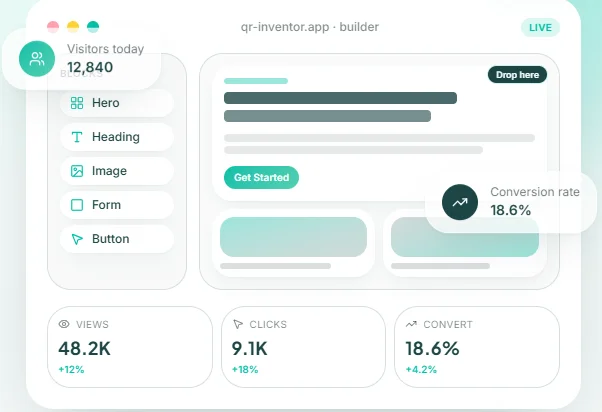
Healthcare QR Analytics Dashboard
A healthcare QR analytics dashboard helps hospitals and clinics monitor engagement and operational performance. These insights help healthcare organizations optimize patient experiences and improve operational efficiency.
Better Patient Experience
Using a medical QR code, patients can immediately access prescription information, check in for appointments, read treatment instructions, or find their way around hospital grounds.
Improved Data Management
QR Inventor’s healthcare QR code solutions assist companies in better arranging and monitoring medical data. Secure medical QR tracking enhances accuracy and lowers paperwork mistakes.
Built-In Error Correction
Built-in error correction ensures reliable scanning even on damaged labels or medical tags.
Start Using QR Inventor Right Away
A secure, easy-to-manage QR code can help you improve your healthcare operations. With QR Inventor, you can generate digital QR codes for healthcare, improve patient access, enhance communication, and manage healthcare data more effectively.
Start creating more intelligent healthcare experiences right now.
QR Codes in healthcare are scannable digital codes that give fast access to medical data, appointments, prescriptions, payments, and healthcare services.
Using a smartphone, patients or healthcare providers can scan the QR code to view related digital data, such as records, forms, reports, or appointment details immediately.
Using QR codes in healthcare includes patient check-ins, prescription management, access to digital medical records, healthcare payments, hospital navigation, and secure patient communication.
QR codes allow healthcare providers to increase efficiency, lower paperwork, enable contactless services, simplify communication, and provide quicker access to medical data.
Yes. Patients may electronically register for appointments, complete paperwork, and receive services via QR code scanning in contactless patient check-in systems.